


Welcome to Early Days with Baby, where you'll find helpful information and supportive resources for families adjusting to life with a newborn.
Importance of Skin to Skin
"Skin-to-skin" means to place your baby against your bare chest while your baby is wearing just a diaper. You can keep the baby warm by placing a blanket over their back. Keeping your baby skin-to-skin after birth is better than keeping them swaddled in a blanket. All child caregivers are encouraged to practice skin-to-skin.
Skin-to-skin helps to:
- Get breastfeeding/chestfeeding off to a good start
- Increase breastmilk/chestmilk supply
- Keep baby comfortable and reduce crying
- Stabilize baby’s heart rate, temperature and breathing rate
- Stabilize baby’s blood sugar
How to practice skin-to-skin safely:
- Sit or lay slightly upright, in a comfortable position
- Turn your baby's face to one side in a position that allows baby to breathe easily
- Make sure you can see your baby's nose and mouth
- Tuck baby's legs up and bring their hands up near baby's face
- Cover your baby's back with a thin blanket
- Let your baby stay on your chest for as long as possible while you are awake
For more information about how to safely practice skin to skin contact visit Skin to Skin Contact for Babies and Young Children – (La Leche League International)
Breastfeeding / Chestfeeding
Getting breastfeeding/chestfeeding off to a good start is important for establishing your milk supply, supporting your baby’s growth and development.
Learn about how you can get started breastfeeding/chestfeeding.
Signs That Baby is Getting Enough
Many parents worry that they won’t be able to tell if their baby is getting enough during feeding. Fortunately, there are clear signs that your baby is feeding well.
Your baby is feeding well if they:
- Feed at least 8 times in 24 hours (frequent feedings are normal, feed baby whenever they show hunger cues)
- Latch on deeply and suck strongly
- You can hear them swallowing (a “ca-ca” sound)
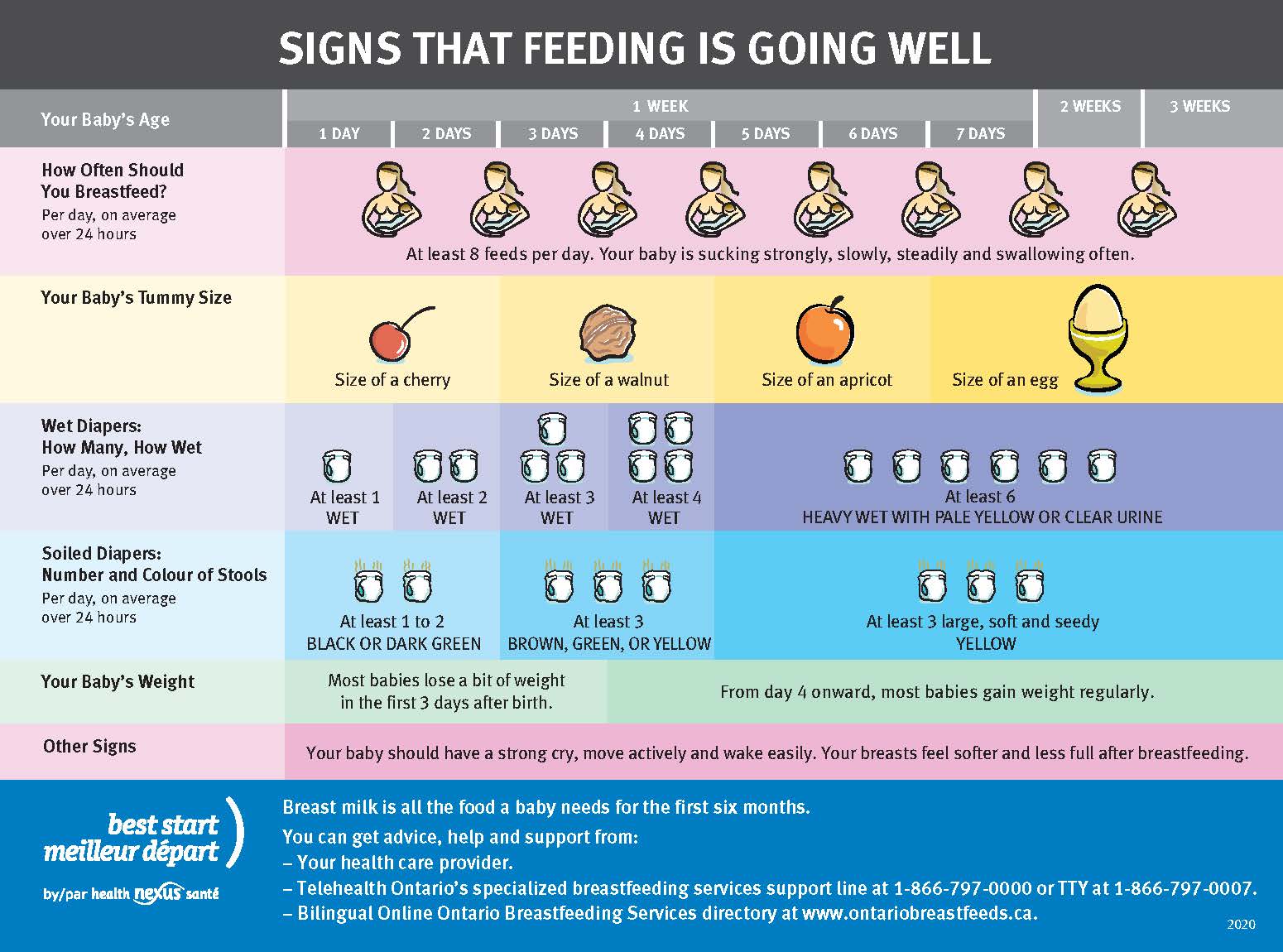
- Have an adequate number of wet and dirty diapers (see chart below for expected output for baby’s age)
- Appear satisfied after feeds
- Are gaining weight as expected
Baby Feeding Cues
Feeding cues are the signs your baby gives to show you when they are ready to feed and when they have had enough to eat.
How often and how long babies feed is determined by your baby’s needs and cues. Newborn babies usually feed every 1-3 hours, 8 or more times in 24 hours.
Feed your baby when you see these early feeding cues:
- Eyes and eyelids moving in light sleep
- Bringing hand to mouth
- Turning head and rooting (reaching with mouth)
Responding to your baby's cues will help to make breastfeeding / chestfeeding easier. It will also help build a good milk supply and prevent full breasts (engorgement). Your baby will probably cry less and gain weight faster. For more information on feeding cues:
- Feeding Cues and Behaviour (Video): describes how you can tell when your baby is hungry and respond to their feeding cues.
- Feeding Cues Chart (PDF): pictures that show how your baby will tell you they are hungry
Well Baby Care and Routine Immunizations
Your baby’s first set of immunizations is typically scheduled at 2 months of age. You can review the full Ontario immunization schedule here (PDF). Please arrange your baby’s immunizations with your primary care provider.
If you or your baby do not currently have a primary healthcare provider, there are local options available:
- NorWest Community Health Centre’s Pregnancy, Sexual/Reproductive Health and First Five Programs – Offers a range of services including prenatal and postnatal care, well-child care up to age 5, and lactation support. To self-refer, call (807) 622-8235, or apply online.
- Lakehead Nurse Practitioner-Led Clinic – Provides a Well-Baby Immunization Program for infants aged 0–18 months. To schedule an appointment, call (807) 475-9595.
- Anishnawbe Mushkiki - Accepting unattached Indigenous newborns for well-baby exams and immunizations. Babies will be rostered as a patient of Anishnawbe Mushkiki. To schedule an appointment, call (807) 623-0383 or email info@mushkiki.com
- Matawa Health Co-operative – Well-Baby Clinic services offered weekly. Prioritizing care to Matawa First Nation community members (off reserve members) without a primary health care provider. Call (807) 346-2370 or email mhc-reception@matawa.on.ca
- Thunder Bay District Health Unit: Vaccine Preventable Disease Program - For routine immunizations please contact (807) 625-5908.
- Note: TBDHU does not provide well baby assessments
Infant Hearing and Vision Screening
Newborn Hearing Screening
All newborns in hospital and community settings will get universal hearing screening as part of Ontario’s Infant Hearing Program.
Hearing screening identifies infants who should have more in-depth testing for hearing loss as early as possible.
Most babies will pass the newborn hearing screening. This means that their hearing is fine at that time.
Get a fact sheet about your baby’s hearing screen
The Thunder Bay Children’s Centre will contact you by text or phone to schedule your baby’s newborn hearing screen. For questions contact (807) 343-6364 or visit www.childrenscentre.ca/infant-hearing-program
Infant Vision Screening
At birth, a baby’s vision is blurry and unfocused. Newborns can detect light, shapes, and movement, and may just be able to make out the face of the person holding them. Their vision gradually develops over the first 6 to 8 months of life.
In Ontario, children's eye exams are covered by OHIP until they turn 20. It’s recommended to schedule a baby’s first eye exam at 6 months of age. However, if you notice any concerns before then, don’t hesitate to contact your health care provider or an optometrist. No referral is needed to book an eye exam for your baby or yourself. You can find a local optometrist through online searches, the Yellow Pages, or by asking for recommendations—then simply call to make an appointment.
Learn more about infant and child vision care.
Healthy Babies Healthy Children Program
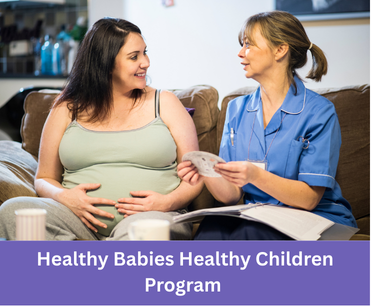
The Healthy Babies Healthy Children Program is a free, voluntary program offered in Ontario for people who are pregnant or parenting young children (0 to 6 yrs). It provides support through home visits from public health nurses and family home visitors to help promote healthy child development and support families in areas such as parenting, building healthy attachment, and accessing community resources.
Learn more about the Healthy Babies Healthy Children Program
Perinatal Mental Health
Baby Blues vs. Postpartum Mood and Anxiety Disorders (PMADs)
Baby Blues
The “baby blues” are common, affecting up to 80% of new parents. Symptoms usually begin a few days after birth and may include mood swings, crying spells, irritability, anxiety, and trouble sleeping. These feelings are typically mild and resolve on their own within 1–2 weeks.
Postpartum Mood and Anxiety Disorders (PMADs)
PMADs are more serious and longer-lasting than the baby blues. They can begin anytime in the first year after birth and include conditions like postpartum depression, anxiety, obsessive-compulsive disorder, and in rare cases, postpartum psychosis.
Common Signs and Symptoms of PMADs:
- Persistent sadness or hopelessness
- Intense irritability or anger
- Excessive worry or panic
- Trouble bonding with your baby
- Changes in sleep or appetite (not related to newborn care)
- Intrusive or disturbing thoughts
- Feeling overwhelmed or unable to cope
- Thoughts of harming yourself or your baby (seek help immediately)
When to Speak with a Health Care Provider
Talk to a health care provider if:
- Symptoms last more than two weeks
- They interfere with your daily life or ability to care for your baby
- You feel disconnected, anxious, or unlike yourself
- You have any thoughts of self-harm or harming your baby
Early support and treatment can make a big difference. You are not alone, and help is available. Additional resources about perinatal mental health found here.
Resources for Dads
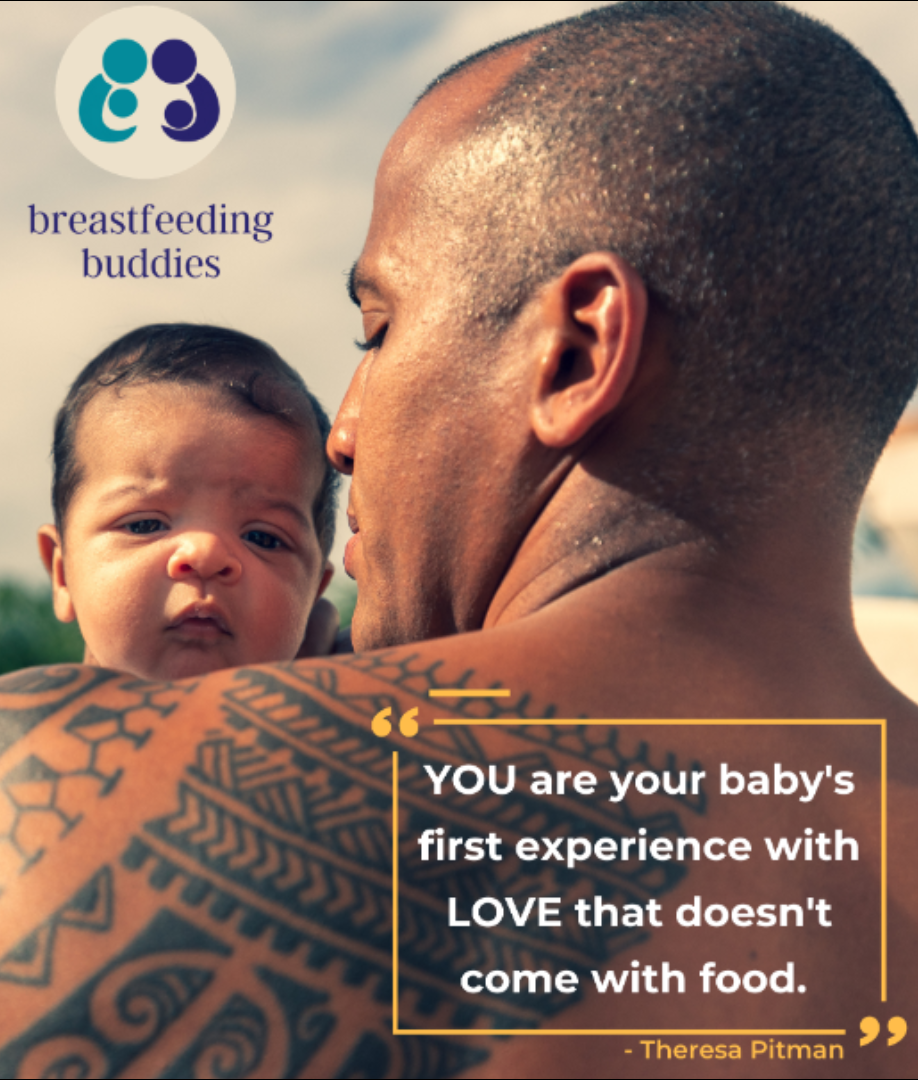 Becoming a parent brings excitement, change, and new responsibilities—especially for dads. As partners grow into their roles, they’re also learning how to support each other and keep their relationship strong. It’s normal to feel uncertain as you adjust to new routines and expectations. Remember, settling into parenthood takes time, patience, and open communication.

Infant Sleep
Safe Sleep for Your Baby
The safest place for your baby to sleep is on their back, in a crib, cradle, or bassinet that meets current Canadian safety standards. It’s recommended to keep your baby’s sleep space in the same room as yours for the first 6 months. Tips for Safer Sleep:
- Use a firm mattress with a fitted sheet — no pillows, toys, or loose bedding
- Always place your baby on their back to sleep, for naps and at night
- Keep your home and your baby’s environment smoke-free
- Room-sharing (not bed-sharing) is recommended for the first 6 months
- Breastfeeding can help reduce the risk of Sudden Infant Death Syndrome (SIDS)
- Position the crib away from cords, heaters, and heavy furniture
- Keep the room at a comfortable temperature — not too hot or too cold
Bed Sharing and Harm Reduction
While Health Canada recommends that babies sleep on their back in their own crib, cradle, or bassinet in the same room as a caregiver for the first 6 months, we understand that some families choose to bedshare — or may unintentionally fall asleep with their baby.
If you are bedsharing, or think you might, it’s important to know how to reduce the risk of infant injury or death. Assessing your risk and preparing the sleep space can help make bedsharing safer.
Learn about:
- Factors that increase risk (e.g., smoking, alcohol or substance use, soft bedding)
- Safer sleep surfaces
- Protective sleep positions
- When bedsharing may not be safe
Making informed choices can help keep your baby as safe as possible, wherever they sleep.
To learn more about harm reduction strategies when breastfeeding visit Safer Sleep for My Baby.
NICU / Preterm Babies
Having a baby in the Neonatal Intensive Care Unit (NICU) can be overwhelming. Explore programs and resources designed to support parents during this challenging time.